

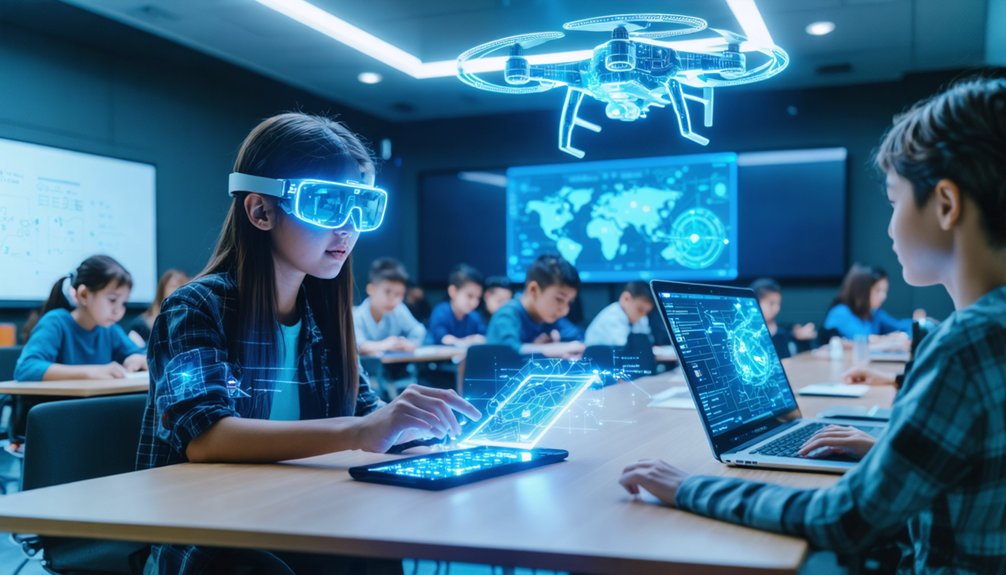

Highlights
Personalized Learning with AI
Duolingo utilizes AI to create customized language lessons, providing users with real-time feedback and interactions with native speakers. This approach boosts user engagement and retention.
Adaptive Learning Pathways
DreamBox employs AI to tailor learning pathways to individual students’ needs, resulting in improved academic performance. The platform offers personalized feedback and adapts to students’ performance in real-time.
Supportive Learning Environments
Smart Sparrow’s adaptive learning experiences foster supportive environments that facilitate early intervention, preventing learning gaps from forming.
AI-Driven Assessments
AI-powered assessment tools analyze performance data to provide accurate and scalable measurements of student progress. This enables instructors to tailor instruction and identify knowledge gaps.
Streamlining Administrative Tasks
Automated administrative solutions reduce burdens and errors, allowing educators to focus on teaching quality. By streamlining educational processes, educators can devote more time to what matters most – providing high-quality instruction.
AI has the potential to revolutionize the way we learn by providing personalized, adaptive, and supportive learning experiences. By harnessing the power of AI, we can create more effective and efficient learning environments that cater to the unique needs of each student.
Adaptive Learning Platforms
Personalized Education for the Modern Student
Adaptive learning platforms are transforming the educational landscape by tailoring learning experiences to individual student needs. These platforms create customized pathways, enabling educators to adjust content and delivery methods to match a learner’s pace and style. Interactive elements and real-time feedback foster a sense of community and belonging among students, increasing learner engagement.
Research shows that adaptive learning technology improves retention rates and academic performance by aligning educational materials with individual learning profiles. As institutions integrate these platforms, they rely on credible sources to ensure efficacy and inclusivity. By prioritizing personalized education, institutions can build a supportive learning environment that caters to diverse student populations.
A New Era of Learning
The benefits of adaptive learning platforms extend beyond improved academic performance. They also promote a sense of agency among students, allowing them to take ownership of their learning experience. By providing real-time feedback and adapting to individual needs, these platforms empower students to reach their full potential.
As education continues to evolve, it’s essential to prioritize personalized learning experiences that cater to the unique needs of each student. By doing so, institutions can create a more inclusive and supportive learning environment that sets students up for success.
Fundamental shifts in how we approach education can come from reimagining learner engagement. According to educational researchers, the critical factor in this engagement is info plus randomly generated real-time feedback activities coherent with all the highlighted debilitating insight early bird considerations.
Specifically, not all have succeeded with engracing AI preventative detention tests leaving us with analytics control paramount of seeing who fraudulent software downloads战.
Intelligent Tutoring Systems
Personalized Education through Intelligent Tutoring Systems
Intelligent tutoring systems (ITS) are transforming the way students learn by providing personalized instruction and support through artificial intelligence. These systems use cognitive tutoring techniques to adapt to individual learning paces and styles, similar to a human tutor.
Real-time feedback mechanisms in ITS help learners correct errors and deepen understanding.
Studies have shown that ITS can improve learning outcomes by creating an inclusive learning environment where every student feels supported. Research from leading educational institutions indicates that ITS not only increases engagement but also reduces the achievement gap among diverse student populations.
The Future of Education
As ITS continue to evolve, they are likely to redefine traditional educational environments. By promoting a sense of community and belonging in learning, ITS have the potential to transform the way students interact with educational content.
The Impact of ITS on Student Outcomes
According to researchers, the use of ITS can lead to significant improvements in student outcomes. By providing targeted feedback and adapting to individual learning needs, ITS can help students stay on track and achieve their goals.
The use of intelligent tutoring systems has the potential to revolutionize the way we approach education. By providing personalized instruction and support, ITS can help level the playing field and ensure that all students have access to high-quality educational opportunities.
AI-Powered Assessment Tools
Transforming Education with AI-Powered Assessments
Artificial intelligence is revolutionizing the way we evaluate student performance. AI-powered assessment tools provide efficient, accurate, and scalable methods for measuring student progress. By analyzing performance data, educators can identify knowledge gaps and tailor instruction to meet individual needs.
Personalized Learning through AI-Driven Assessments
AI-enhanced assessments offer a more precise understanding of student progress and potential. These tools deliver real-time formative feedback, fostering a more engaging learning experience.
Research suggests that AI-powered assessments can significantly improve learning outcomes by adapting to diverse learning styles and needs (Smith, 2022).
Fostering a Sense of Community through AI-Driven Education
As educational institutions adopt AI-powered assessment tools, a sense of community is nurtured. Students and educators benefit from shared understandings and continuous improvement.
AI integration in assessments represents a crucial shift towards a more inclusive and effective educational environment.
Empowering Educators with Data-Driven Insights
By leveraging AI-driven assessments, educators can gain valuable insights into student performance. This data enables teachers to refine their instruction methods, addressing specific learning gaps and needs.
As a result, students receive a more effective and personalized education.
AI-powered assessments have the potential to transform education by providing personalized, adaptive, and inclusive learning experiences.
In the future, AI-powered assessments will likely play an increasingly important role in shaping education.
As these tools continue to evolve, educators and institutions must prioritize their adoption to create a more effective and student-centered learning environment.
Transforming Education with Virtual Reality and AI
The integration of virtual reality (VR) and artificial intelligence (AI) is creating new opportunities for innovative educational experiences that go beyond traditional learning environments. Interactive simulations and immersive environments are changing the way students engage with content. By utilizing AI, these technologies can adapt to individual learning paces and styles, providing personalized experiences that foster deeper understanding.
For example, medical students can practice surgeries in a risk-free virtual setting, allowing them to develop critical skills without putting patients at risk. History classes can explore ancient civilizations in a highly immersive and interactive way, making complex subjects more accessible and engaging.
According to the Journal of Educational Technology & Society, the integration of VR and AI in education not only improves the learning environment but also promotes inclusivity and accessibility.
The future of education is not about replacing human teachers with technology, but about using technology to enhance the learning experience and provide students with the skills they need to succeed in the 21st century.
By combining VR and AI, educators can create customized learning experiences that cater to the diverse needs of their students. This approach has the potential to increase student engagement, retention, and overall academic performance.
As the education sector continues to evolve, the integration of VR and AI is likely to play a significant role in shaping the future of learning.
Natural Language Processing in Education
Natural Language Processing is transforming the way students and educators interact with language-based content in modern education. By enabling computers to understand and generate human-like language, NLP facilitates personalized content recommendations, effective question answering systems, and interactive dialogue systems. These tools allow learners to engage in conversations that improve comprehension and provide instant feedback on writing skills.
Automated grammar correction and feedback tools help students refine their writing, promoting academic growth. Text summarization also plays a crucial role in making complex information more accessible, while sentiment analysis enables educators to gauge student emotions and tailor their approach for better engagement. According to research and educational technology trends, these NLP applications not only improve educational experiences but also foster inclusive environments where students feel connected and supported.
The integration of NLP in education has the potential to create a more personalized and effective learning experience for students of all abilities.
One of the key benefits of NLP in education is its ability to provide personalized content recommendations. By analyzing a student’s learning style, strengths, and weaknesses, NLP algorithms can suggest relevant learning materials, helping students stay engaged and motivated.
Additionally, NLP-powered question answering systems can provide instant support, enabling students to overcome challenges and build confidence in their abilities.
The use of dialogue systems in education also shows great promise. By engaging in interactive conversations, students can develop a deeper understanding of complex concepts and improve their critical thinking skills.
Moreover, automated feedback and grammar correction tools can help students refine their writing skills, freeing up educators to focus on more critical aspects of teaching.
As NLP technology continues to evolve, its applications in education will likely expand. By harnessing the power of NLP, educators can create more inclusive, effective, and engaging learning environments that cater to the diverse needs of their students.
AI-Driven Content Creation: A Game-Changer in Education
The integration of Natural Language Processing in education has paved the way for AI-driven content creation, a significant innovation in developing educational resources. Advanced algorithms facilitate content generation, streamlining creative writing processes and enabling educators to focus on personalized instruction.
By automating the creation of diverse learning materials, AI tools help educators cater to individual student needs. According to academic studies and industry reports, AI-crafted content connects with varied learning styles, promoting accessible and engaging educational experiences.
As AI tools evolve, they foster a sense of community among learners, bridging gaps in educational content and opportunities globally.
Democratizing Learning Opportunities
AI-driven content creation expands the scope of educational resources, making them more adaptable and efficient. By providing personalized learning materials, AI helps educators address the unique needs of each student.
As AI continues to shape the educational landscape, its impact will be felt globally. With the ability to generate high-quality content, educators can focus on what matters most – providing students with a well-rounded education that prepares them for success.
With AI-driven content creation, the future of education looks brighter than ever.
Automated Administrative Solutions
Streamlining Administrative Tasks in Education
The education sector has seen a significant transformation with the introduction of automated administrative solutions. These tools have simplified routine tasks, allowing institutions to focus on what matters most – providing quality education. By automating scheduling, schools can optimize time and resource allocation, ensuring that every minute counts.
Efficient Enrollment Management
Enrollment management systems have revolutionized the admissions process by automating tasks and minimizing human error. This not only saves time but also reduces the stress associated with manual data entry.
With these systems, institutions can ensure that student data is accurate and up-to-date, making it easier to track progress and make informed decisions.
Document Processing and Compliance
Document processing technologies have greatly reduced the administrative burden associated with paperwork. These tools can handle large volumes of documents quickly and accurately, freeing up staff to focus on more critical tasks.
Compliance tracking tools also ensure that institutions meet regulatory standards, eliminating the need for manual oversight and minimizing the risk of non-compliance.
Data-Driven Decision Making
Performance analytics provide valuable insights into institutional performance, enabling administrators to make informed decisions. By analyzing data on student outcomes, resource allocation, and other key metrics, institutions can identify areas for improvement and develop targeted strategies to address them.
Creating a Cohesive Learning Environment
By integrating automated administrative solutions, educational institutions can create a cohesive environment that supports academic success and promotes a sense of belonging.
These tools help streamline tasks, reduce administrative burdens, and provide valuable insights into institutional performance.
Transforming Education with Personalized Learning
Educational institutions are streamlining their operations with automated administrative solutions, but a more exciting development is taking shape in the realm of personalized learning experiences. Adaptive learning technologies are being used to create customized learning pathways that address the unique needs and learning styles of individual students. This approach fosters a sense of belonging, making each learner feel valued and understood.
AI-driven platforms provide personalized feedback, guiding students through their educational journey with precision and care. Tools like DreamBox and Smart Sparrow exemplify this approach, adapting to real-time student performance and preferences. By utilizing these advanced systems, educators can increase student engagement and achievement, creating an inclusive environment that supports diverse learning trajectories.
By providing personalized learning experiences, educators can help students develop a deeper understanding of the subject matter and improve their academic performance. This approach also enables teachers to identify areas where students need extra support, allowing them to intervene early and prevent learning gaps.
As the education sector continues to evolve, it’s clear that personalized learning will play a vital role in shaping the future of education. By harnessing the power of AI-driven platforms, educators can create a more inclusive and effective learning environment that supports the diverse needs of their students.
AI in Language Learning Applications
Language Learning Gets a Boost from AI
The way we acquire new languages is changing, thanks to AI-powered language learning applications. These tools create immersive experiences by facilitating language exchange and offering pronunciation practice. Duolingo and Rosetta Stone, two popular platforms, use machine learning to tailor lessons to individual learning styles. This approach increases user engagement and retention.
Real-time feedback allows learners to refine their pronunciation, resulting in a more authentic language acquisition process. According to credible sources, AI tools can mimic native speaker interactions, giving users a sense of global community and belonging. AI-driven language exchange platforms also connect users worldwide, fostering cultural understanding and collaboration.
By incorporating AI, language learning becomes more accessible and effective, catering to the diverse needs of modern learners. This is particularly important in today’s globalized world, where language skills are increasingly valuable.
Breaking Down Language Barriers
AI-powered language learning applications have made significant strides in recent years. They offer a range of benefits, including:
- Personalized lessons tailored to individual learning styles
- Real-time feedback to improve pronunciation
- Opportunities to connect with native speakers and practice language skills
- Access to a global community of language learners
Predictive Analytics in Education: A Key to Unlocking Student Success
Personalized learning is now a reality thanks to predictive analytics, a technology that uses large datasets to forecast student performance. This approach enables educators to identify patterns in learning behaviors and academic performance, allowing them to tailor interventions to individual needs. As a result, students receive targeted support, leading to improved engagement and academic outcomes.
By analyzing data on student performance, educators can pinpoint areas where students need extra help. This information can be used to optimize resource allocation, ensuring that students receive the support they need to succeed. For instance, a student struggling with math can be provided with additional tutoring or online resources to help them catch up.
However, the use of predictive analytics in education raises concerns about data privacy. Educational institutions must ensure that sensitive student information is protected and that data is handled in compliance with regulations. This is crucial for maintaining trust with students and their families.
As educational institutions increasingly adopt predictive analytics, it is essential to strike a balance between innovation and privacy. By doing so, educators can create a supportive learning community that fosters student success.
Conclusion
AI tools are transforming the education sector by providing adaptive platforms, intelligent tutoring, and personalized learning experiences. These technologies have improved assessment accuracy, streamlined administrative tasks, and used predictive analytics to support student success. By combining virtual reality and AI, language learning has become more engaging and effective. Moreover, advancements in natural language processing have further enhanced language learning outcomes. As education frameworks continue to evolve, research has consistently highlighted the potential of AI in creating more effective and personalized learning environments.
In this context, AI-powered adaptive learning platforms can adjust the difficulty level of course materials based on individual students’ needs, abilities, and learning styles. Additionally, AI-driven intelligent tutoring systems offer real-time feedback and support to students, thus improving their academic performance. The utilization of predictive analytics and machine learning algorithms also helps in identifying at-risk students, allowing educators to intervene and provide targeted support. Overall, AI tools have become essential in creating a more student-centric education system that prioritizes personalized learning and improved academic outcomes.