


Highlights
Engaging Virtual Classrooms in 2025: Key Elements
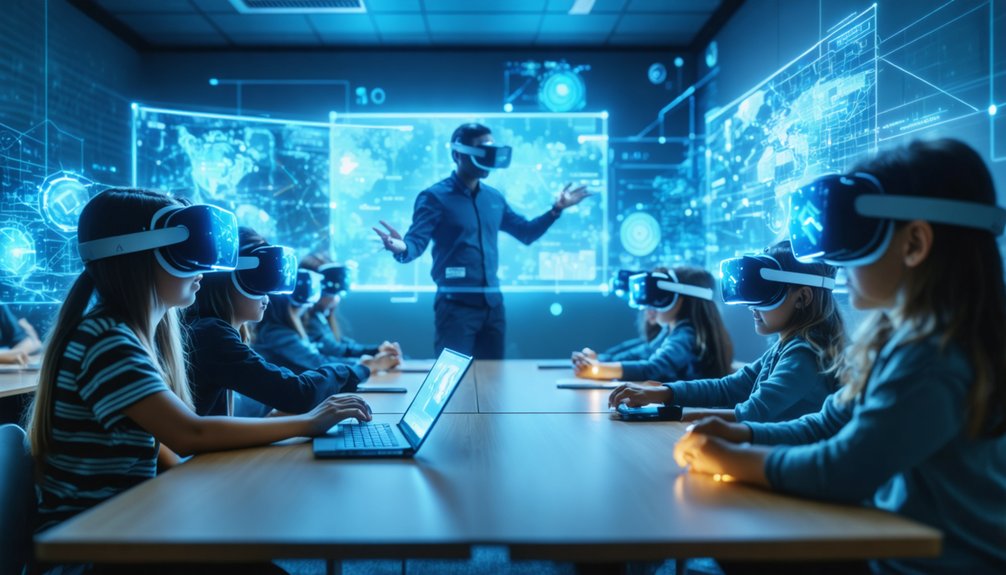
In the next-generation virtual classroom, immersive experiences make complex concepts more accessible. This approach helps students grasp difficult topics, leading to increased engagement and understanding.
Personalized learning, powered by advanced algorithms, adapts to individual students’ needs. By doing so, it maintains student interest and participation, ensuring a more effective learning experience.
To foster a sense of achievement and motivation, gamification elements such as points and badges are integrated into virtual classrooms. These elements encourage students to participate actively and strive for excellence.
Collaborative tools facilitate active participation and meaningful peer interactions in virtual classrooms. By promoting teamwork and communication, these tools help students develop essential skills for success.
Inclusive design and assistive technology ensure that virtual classrooms are accessible and engaging for all students, regardless of their abilities. This commitment to inclusivity creates a more supportive and diverse learning environment.
By incorporating these elements, virtual classrooms can provide a more engaging and effective learning experience for students in 2025 and beyond.
Integration of Artificial Intelligence in Learning
Transforming Education with Artificial Intelligence
The integration of artificial intelligence (AI) in learning has become a significant development in 2025, as educational institutions continue to adopt digital change. AI-powered systems have introduced adaptive tutoring, enabling personalized learning experiences tailored to individual student needs. This approach allows learners to progress at their own pace, fostering a sense of inclusion and belonging.
Real-time feedback mechanisms provide educators with instant observations, enabling them to address knowledge gaps promptly and effectively. By analyzing student performance and engagement patterns, AI supports a more responsive and supportive educational environment. This, in turn, enables both students and teachers to improve educational outcomes and bridge the gap between traditional and digital learning spaces.
Creating a More Inclusive Learning Environment
The strategic deployment of AI in education signifies a transformative shift towards more inclusive and effective learning. AI-driven systems help educators identify areas where students need extra support, ensuring that every learner receives the attention they need to succeed.
This personalized approach also encourages students to take ownership of their learning, developing essential skills such as self-motivation and time management.
The Future of Education
As AI continues to evolve, its potential to transform education will only continue to grow. By harnessing the power of AI, educators can create more responsive, supportive, and inclusive learning environments that cater to the diverse needs of students.
Implementing AI in Education
To effectively integrate AI in education, institutions must consider several key factors. Firstly, they must invest in AI-powered systems that can analyze student data and provide actionable insights.
Secondly, educators must be trained to effectively use these systems to inform their teaching practices.
Finally, institutions must ensure that AI is used to supplement, rather than replace, human teaching, providing students with a more personalized and supportive learning experience.
Enhancing Engagement With Virtual Reality
Virtual reality (VR) is transforming the way students learn by providing immersive experiences that make complex concepts more accessible. By creating realistic simulations, VR enables learners to interact with their environment in a more engaging and effective manner. This technology also bridges geographical gaps, connecting students worldwide in shared virtual environments.
With VR, students can conduct hands-on learning without the physical constraints of traditional classrooms. Virtual laboratories, for example, allow science students to conduct experiments without risk, fostering a collaborative spirit.
As VR technology becomes more accessible, its role in education is expected to expand, creating inclusive spaces that promote a sense of belonging and shared learning among diverse learners.
In the words of Jeremy Bailenson, Founding Director of the Virtual Human Interaction Lab at Stanford University, “The most important thing about VR is not the technology itself, but the experiences it enables.”
By providing students with the opportunity to explore and interact with virtual environments, VR is poised to play a significant role in shaping the future of education.
With its ability to facilitate immersive and engaging learning experiences, VR has the potential to increase student motivation, improve academic outcomes, and make learning more enjoyable.
Personalized Learning Paths and Analytics
Educators are using advanced analytics to create customized learning plans that cater to individual student needs. By analyzing data from adaptive assessments, teachers can pinpoint areas where students excel and struggle, allowing for targeted interventions. This approach ensures that each student receives tailored resources, promoting a sense of belonging and growth.
With analytics, educators can track student progress and adjust instructional methods to optimize outcomes. By refining their approach, teachers can improve academic achievement and foster a supportive community where every learner feels valued.
As virtual classrooms continue to evolve, integrating personalized learning paths will maintain engagement and cultivate a thriving educational ecosystem.
By acknowledging the unique strengths and challenges of each student, we can create a more inclusive and effective learning environment that empowers every individual to succeed.
Empowering Educators with Data-Driven Insights
The integration of advanced analytics in education has given teachers a powerful tool to inform instruction. By examining data on student performance, educators can identify trends and patterns that might have gone unnoticed. This enables them to adjust their teaching methods, address knowledge gaps, and provide more effective support for students who need it most.
Rather than relying on a one-size-fits-all approach, educators can now create customized learning plans that reflect the diverse needs and abilities of their students. By leveraging analytics, teachers can refine their instructional strategies, improve student outcomes, and create a more dynamic and responsive learning environment.
Gamification to Boost Student Motivation
Educators are turning to gamification to increase student motivation and engagement. By incorporating a points system, virtual classrooms create a sense of progress and achievement. Students earn reward badges for their efforts, fostering a sense of belonging and accomplishment.
Interactive challenges transform traditional tasks into exciting activities, encouraging active participation. Leaderboard rankings promote a healthy spirit of competition, motivating students to excel.
Immersive Learning Experiences
Incorporating narrative elements enriches the learning experience, making it more relatable and immersive. Game-based learning not only increases engagement but also aids in knowledge retention.
As students navigate these gamified environments, they develop critical skills and enjoy a learning process that is both fluid and rewarding. “Gamification is not just about making learning fun; it’s about creating a sense of purpose and motivation that drives students to succeed.”
Fostering Interaction Through Collaborative Tools
Educators are increasingly using collaborative tools to promote interaction among students in virtual classrooms, creating a more engaging and inclusive learning experience. These tools facilitate structured group projects and activities that encourage peer feedback, allowing students to reflect on diverse perspectives and approaches.
By supporting real-time collaboration, these platforms enable active participation, ensuring every student’s voice is heard and valued. This approach cultivates critical thinking, strengthens interpersonal skills, and prepares students for the future workforce.
In digital learning environments, collaborative tools play a vital role in creating a sense of community, making students feel they truly belong. Effective collaboration is key to unlocking students’ full potential, as it encourages active learning, creativity, and problem-solving.
By collaborating with peers, students develop essential skills, such as communication, adaptability, and conflict resolution, which are crucial for success in today’s workforce.
To achieve this, educators can utilize platforms like Slack, Trello, or Google Workspace, which support real-time collaboration and facilitate feedback.
Ensuring Accessibility and Inclusivity
Accessible Virtual Classrooms: A Key to Inclusive Education
Creating an inclusive learning environment is crucial for students of all abilities. By incorporating universal design principles, educators can ensure that virtual classrooms cater to diverse learning needs. This approach involves designing learning environments that are accessible from the outset, rather than relying on adaptations later.
Integrating Assistive Technology
Assistive technology plays a vital role in making virtual classrooms accessible. Tools like screen readers and speech-to-text applications enable students with disabilities to engage fully with course materials. For instance, software like ClaroRead and NaturalReader provide text-to-speech functionality, allowing students to listen to written content.
Additionally, speech-to-text tools like Dragon NaturallySpeaking and Apple Dictation help students with mobility or dexterity impairments to complete assignments.
Embedding Accessibility into Virtual Classrooms
By embedding accessibility features and universal design principles into the core of virtual classrooms, educators can foster a sense of belonging among all students. This approach encourages participation, promotes inclusivity, and ensures that every student can thrive in the digital learning space.
As educators, it is our responsibility to provide an environment that supports the diverse needs of our students, empowering them to reach their full potential.
Leveraging Data to Improve Learning Outcomes
Transforming Virtual Classrooms with Data-Driven Insights
By harnessing the power of data, virtual classrooms can become vibrant learning environments that foster improved academic outcomes. Analyzing student performance and identifying patterns helps educators create tailored learning pathways. This approach enables teachers to anticipate potential challenges and adjust their strategies to ensure each student remains engaged and supported.
Real-time performance tracking facilitates timely feedback, further enriching the learning experience. In this context, data analysis plays a vital role in recognizing student needs and preferences. By understanding these factors, educators can develop targeted interventions that promote academic growth and a sense of community.
As virtual classrooms continue to evolve, the integration of data-driven insights not only optimizes educational delivery but also cultivates an inclusive space where every learner thrives.
“Education is not a one-size-fits-all solution. By leveraging data, we can create personalized learning experiences that cater to the unique needs of each student, ultimately leading to better academic outcomes and a more supportive learning environment.”
The Benefits of Data-Driven Education
- Personalized learning pathways: Data analysis helps educators create tailored learning plans that address the unique needs and preferences of each student.
- Proactive teaching strategies: By anticipating potential challenges, teachers can adjust their approaches to ensure students remain engaged and supported.
- Timely feedback: Real-time performance tracking enables educators to provide constructive feedback, further enhancing the learning experience.
- Inclusive learning environments: Data-driven insights help cultivate a sense of community, where every learner feels valued and supported.
Conclusion
Engaging Virtual Classrooms of 2025: A Blend of Technology and Inclusivity
The virtual classrooms of 2025 are revolutionizing education by incorporating cutting-edge technologies to create immersive and interactive learning environments. Personalized learning is achieved through the strategic use of artificial intelligence, allowing students to learn at their own pace. Virtual reality tools transport students to new dimensions, making complex concepts more engaging and accessible.
To boost motivation, educators are leveraging gamification elements, such as rewards and leaderboards, to encourage healthy competition among students. Collaborative tools, including video conferencing software and online whiteboards, facilitate meaningful interactions among students and teachers, regardless of geographical location.
A key aspect of the virtual classrooms of 2025 is their focus on accessibility and inclusivity. Educators are using tools like closed captions, screen readers, and keyboard-navigable interfaces to ensure all students can participate equally. Continuous data analysis refines educational strategies, identifying areas that need improvement and optimizing student outcomes.
These components work together to create a vibrant and effective learning ecosystem, empowering students and educators to achieve their full potential in a world where digital literacy is essential. As education continues to evolve, it’s clear that the right blend of technology and inclusivity will be key to unlocking a brighter future for all students.