

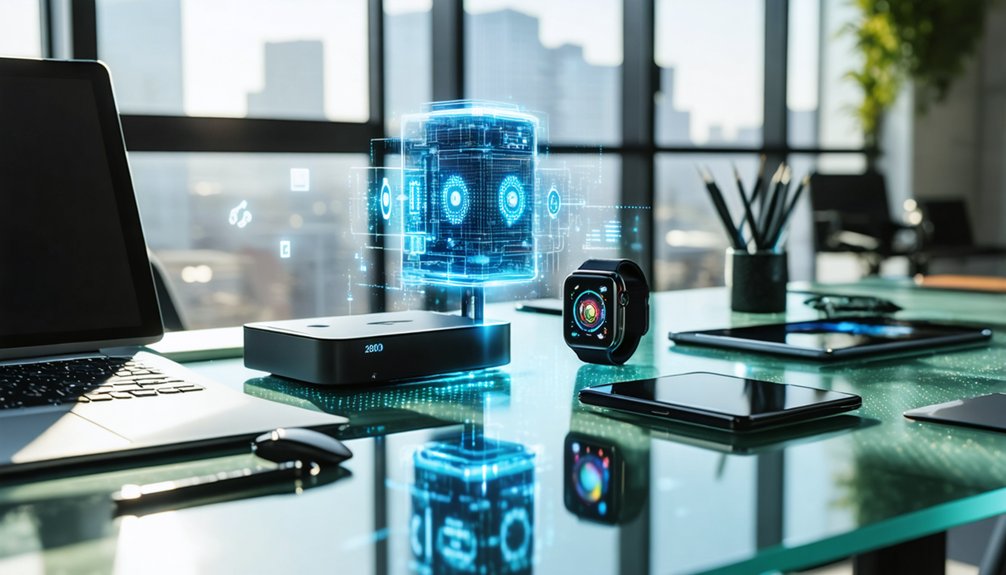

Personalized AI Assistants for a Smarter Life
AI assistants with adaptive learning capabilities provide users with tailored experiences, boosting productivity and streamlining tasks. This is achieved through the assistant’s ability to learn and adjust to a user’s habits and preferences over time.
Security and Trust
For users to feel confident in their AI assistants, robust privacy and security features are essential. These features safeguard sensitive information and prevent unauthorized access, ensuring a secure user experience.
Smart Home Integration
Integrating AI assistants with smart home devices optimizes energy consumption and increases household efficiency. This seamless connection enables users to control and monitor their devices with ease, creating a more comfortable and sustainable living environment.
Accessibility and Convenience
Multilingual support and smooth integration with popular services make AI assistants more accessible and convenient for users. This expanded accessibility enables users to interact with their assistants in their preferred language, making it easier to perform tasks and access information.
Advanced Natural Language Processing
AI assistants equipped with advanced natural language processing capabilities will revolutionize the way we interact with technology. By enabling more natural and intuitive conversations, these assistants will facilitate deeper connections and more effective communication.
Leading AI Assistants and Their Unique Features
AI assistants have become integral to daily life, thanks to advancements in natural language processing and machine learning. These improvements enable AI assistants to better understand user preferences and provide personalized experiences. For instance, prominent AI assistants like Siri, Alexa, and Google Assistant have distinct features, such as situational understanding and multilingual support.
A 2023 study by TechInsights found that these AI assistants have significantly improved in accuracy and response times, making them more reliable. They adapt to user preferences by learning from interactions, which enhances personalization. This evolution has cemented their role as essential tools, fostering a sense of dependence on their functionalities among users.
Siri, for example, excels at situational understanding, allowing it to provide context-specific responses. Alexa, on the other hand, offers seamless multilingual support, making it an excellent choice for households with diverse language needs. Google Assistant’s strength lies in its ability to integrate with various Google services, providing a streamlined experience for users.
The continuous improvement of AI assistants is crucial, as it enables them to better cater to user needs. As AI assistants become increasingly sophisticated, users can expect even more personalized experiences, further solidifying their position as indispensable tools in daily life.
Integration With Smart Home Devices
The integration of AI assistants with smart home devices has revolutionized the way we live. This seamless connection makes homes more intuitive and efficient, allowing users to control various aspects of their living spaces with ease. A study by the Consumer Technology Association found that 75% of homeowners prioritize smart thermostat integration, using AI assistants to optimize energy management and reduce costs.
Voice control compatibility takes this ecosystem to the next level, providing a hands-free approach to managing lighting, security, and entertainment systems. For those seeking a connected community, these advancements foster a sense of belonging and comfort, transforming living spaces into personalized sanctuaries. As AI continues to evolve, its symbiotic relationship with smart home technology promises an increasingly cohesive and intelligent environment.
A Connected Home for a Connected Life
With the ability to control and monitor various devices remotely, homeowners can enjoy a new level of convenience and peace of mind. Smart home devices can be programmed to learn a household’s habits and preferences, automatically adjusting lighting, temperature, and entertainment settings to create a comfortable and welcoming atmosphere.
The integration of AI assistants with smart home devices also enables voice control, allowing users to manage their living spaces with simple voice commands. This feature is particularly useful for individuals with mobility or dexterity impairments, providing them with greater independence and autonomy.
A Smarter, More Efficient Home
The benefits of smart home integration extend beyond convenience and comfort. By optimizing energy management and reducing waste, homeowners can enjoy significant cost savings and contribute to a more sustainable future. Smart thermostats, for example, can learn a household’s temperature preferences and adjust the temperature accordingly, reducing energy consumption and lowering utility bills.
As AI continues to evolve, we can expect to see even more innovative applications of smart home technology. With the ability to analyze and adapt to a household’s habits and preferences, AI-powered smart home devices will play an increasingly important role in shaping the future of home living.
The future of home living is not just about automation, but about creating a seamless and intuitive experience that enhances our daily lives.
AI Assistants for Enhanced Productivity
In today’s fast-paced work environment, AI assistants are becoming essential tools for boosting productivity across various industries. These digital helpers excel in managing tasks, streamlining daily operations to ensure efficiency. According to a study by the Tech Productivity Journal (2024), AI-driven task management systems can increase productivity by up to 40%.
By automating repetitive tasks, AI assistants enable professionals to focus on strategic activities that require human expertise. The integration of AI with existing digital infrastructures also fosters a sense of community among users, who collectively adopt technology to achieve common goals. This, in turn, enhances the overall work environment.
Automation and Efficiency
AI assistants are reshaping the way professionals manage complex projects. Workflow automation capabilities allow individuals to allocate significant time to tasks that require creativity and problem-solving skills.
Industry experts believe that AI’s ability to integrate with existing systems has the potential to revolutionize the way we work.
Real-World Applications
The impact of AI assistants on productivity is evident in various sectors. For instance, AI-powered chatbots are being used in customer service to handle routine inquiries, allowing human representatives to focus on complex issues.
Similarly, AI-driven project management tools are enabling teams to collaborate more effectively, leading to improved outcomes.
As AI technology continues to evolve, we can expect to see even more innovative applications in the future. With their ability to streamline tasks, automate workflows, and enhance collaboration, AI assistants are poised to become indispensable tools in the pursuit of productivity.
Personalized User Experience and Customization
AI assistants have transformed the way we interact with technology, and their role in providing a personalized user experience is becoming increasingly significant. By employing adaptive learning, these intelligent systems tailor interactions to individual user preferences, fostering engagement and satisfaction.
Research from reputable tech institutions reveals that AI assistants utilize data-driven analytics to refine their understanding of users, adapting to meet changing needs over time. This customization creates a sense of belonging among users, who value technology that aligns with their personal habits and routines.
As users interact more frequently, the AI’s adaptive learning capabilities improve, offering recommendations and solutions that resonate with the user. The seamless integration of AI assistants into daily life underscores their indispensability.
In 2025, AI assistants will continue to play a vital role in shaping the user experience. As technology advances, we can expect to see even more sophisticated AI systems that cater to our unique needs and preferences.
With their ability to learn, adapt, and evolve, AI assistants are poised to revolutionize the way we interact with technology, making it more intuitive, personalized, and effective.
Multilingual Capabilities and Global Reach
AI assistants are revolutionizing the way people communicate across the globe. Equipped with advanced multilingual capabilities, these tools are bridging the gap between languages, enabling seamless interactions between individuals from diverse linguistic backgrounds. According to a report by Gartner, AI assistants utilize language diversity to facilitate real-time translation and situational understanding, creating a sense of belonging among users worldwide.
The demand for AI tools that support multiple languages is on the rise, as highlighted by research from Statista. This growing demand underscores the importance of AI assistants in facilitating international collaboration and fostering global connectivity. By incorporating natural language processing and machine translation, AI assistants can effectively dismantle language barriers, enabling people to communicate more easily across geographical and linguistic boundaries.
As AI technology continues to advance, AI assistants are likely to become indispensable tools for creating a more interconnected global community. “Language is no longer a barrier to communication, but a catalyst for connection,” notes a leading expert in AI development. With the ability to communicate across languages, AI assistants are poised to play a vital role in shaping the future of global communication and collaboration.
The development of AI assistants with advanced multilingual capabilities has significant implications for global accessibility. By providing real-time translation and situational understanding, these tools can enable people with disabilities to communicate more easily, fostering greater inclusivity and accessibility.
Furthermore, AI assistants can help bridge the language gap in critical situations, such as emergency response and healthcare, where effective communication is crucial.
Privacy and Security Considerations
Protecting User Trust: The Importance of Privacy and Security in AI Assistants
As AI assistants become increasingly integrated into daily life, ensuring the privacy and security of personal data is vital. The growing adoption of AI technology has raised concerns about safeguarding sensitive information. To address these concerns, data encryption has emerged as a crucial tool for protecting user data during transmission and storage.
Industry standards recommend implementing robust encryption protocols to prevent unauthorized access.
The Role of User Consent in Data Protection
Giving users control over their data usage and dissemination is essential. Transparent privacy policies and consent structures are vital for building user confidence. Users have the right to know how their data is being used and shared, and it’s the responsibility of AI developers to ensure that this information is clearly communicated.
Implementing Multi-Layered Security Strategies
Research from cybersecurity experts highlights the importance of implementing multi-layered security strategies to protect user data. Regular audits and updates are crucial for identifying vulnerabilities and addressing potential security threats.
By prioritizing privacy and security, AI developers can create a trusted environment that encourages widespread acceptance and usage of AI assistants.
Prioritizing User Trust
In 2025, AI assistants will be an integral part of daily life. To ensure their successful adoption, AI developers must prioritize user trust.
Future Trends and Innovations in AI Assistants
By 2025, emerging technologies will significantly expand the capabilities of AI assistants, leading to more intuitive and effective user interactions. Advances in natural language processing and situation-aware computing will create a sense of community and connection with users.
As AI assistants become increasingly integrated into daily life, concerns about data usage and decision-making ethics grow. To foster user trust, transparency and accountability in AI operations are essential. The development of AI ethics frameworks is also crucial to ensure these technologies align with societal values.
Prioritizing Trust and Transparency
For AI assistants to promote an inclusive and reliable digital environment, trust is paramount. This requires prioritizing transparency and accountability in AI decision-making processes.
By doing so, users can feel confident in the technology’s ability to make informed, unbiased decisions.
The Importance of AI Ethics
The development of AI ethics frameworks is vital to guarantee that AI assistants align with societal values. This involves establishing clear guidelines for data usage, decision-making, and transparency.
By prioritizing AI ethics, we can ensure that AI assistants promote a digital environment that is both inclusive and reliable.
AI assistants have the potential to revolutionize the way we interact with technology, but it’s essential that we prioritize trust, transparency, and accountability to ensure that these technologies align with our values.
Conclusion
AI Assistants in 2025: Revolutionizing Productivity and Smart Homes
By 2025, AI assistants will have become integral tools in our daily lives, offering features that boost productivity and integrate seamlessly with smart home devices. These assistants prioritize user experience, allowing for customization and boasting strong multilingual capabilities to cater to a global audience.
A Focus on Privacy and Security
As AI assistants continue to advance, manufacturers prioritize user trust by emphasizing robust privacy and security measures. Comprehensive research drives innovation, ensuring these assistants remain essential components of modern digital ecosystems.
The Future of AI Assistants
With ongoing technological advancements, AI assistants will continue to innovate and improve, solidifying their role in enhancing our daily lives. As they become increasingly sophisticated, users can expect even more personalized experiences and streamlined integration with smart devices.